Gauravi Tolamatti
Former Software Engineer at JP Morgan Chase, now a full-time graduate student exploring Machine Learning and intelligent systems at NUS.
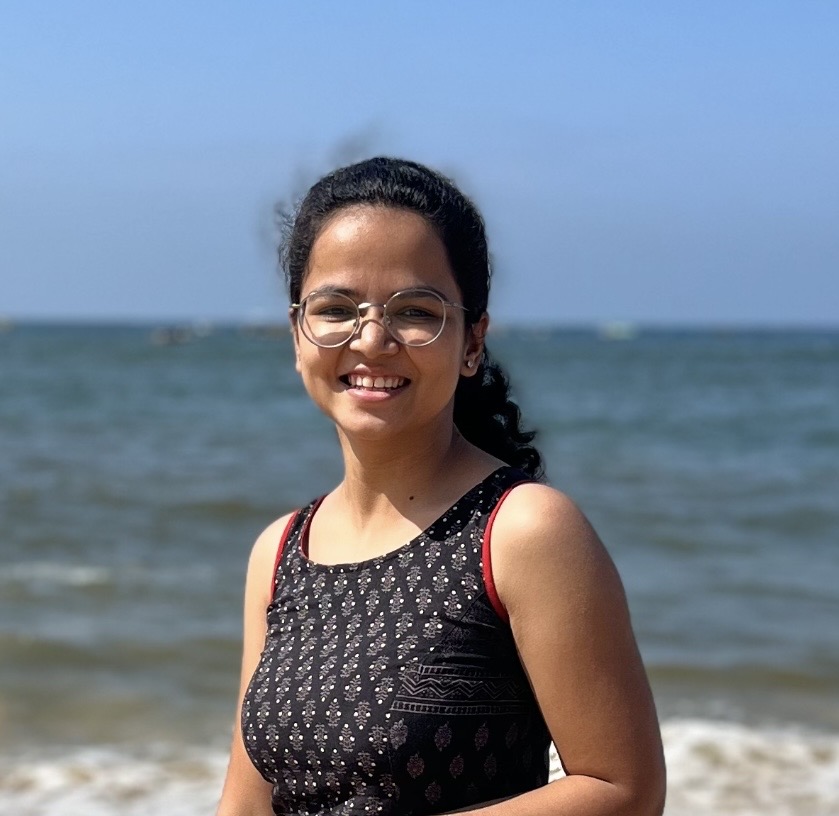
Former Software Engineer at JP Morgan Chase, now a full-time graduate student exploring Machine Learning and intelligent systems at NUS.
I am a software engineer with a strong foundation in computer science and experience building large-scale financial systems. Currently, I am pursuing my Master’s in Computer Engineering at the National University of Singapore, where I am focusing on machine intelligence and applied AI.
My interests lie at the intersection of robust software engineering and intelligent systems - from scalable backend architectures to computer vision and deep learning research.
At JP Morgan Chase, I worked on large-scale internal financial governance platforms used by multiple business teams for budgeting, forecasting, approvals, and compliance. My work spanned both backend and frontend systems, with a strong emphasis on building reliable services that could support complex financial workflows at scale.
I was involved in designing and developing core modules for budget allocation and forecast-vs-actual analytics, translating governance requirements into maintainable technical architectures. Alongside feature development, I contributed to improving usability through UI/UX refinements and supported production releases through reviews, defect resolution, and deployment readiness.
As a freelance full stack developer for StudioMH02, I independently delivered a full-stack architectural portfolio website from concept to production. This involved understanding design requirements, translating them into clean user interfaces, and implementing the supporting backend and deployment setup.
The project emphasized visual clarity, performance optimization, and iterative refinement through close client collaboration, resulting in a polished production-ready website.
This ongoing research project at the National University of Singapore explores camouflage as a computer vision problem, where the goal is to generate texture maps that allow physical objects to visually blend into their surrounding environments.
My current work focuses on scene-aware texture synthesis and appearance modeling, with particular attention to robustness across varying lighting conditions and complex backgrounds. The project is ongoing, with the intention of developing a publication-quality solution.
This project resulted in an IEEE research publication proposing a GAN-based approach for achieving realistic lip synchronization in dubbed videos. The work addressed challenges in aligning audio and visual modalities while preserving temporal consistency.
I contributed to designing the deep learning pipeline, stabilizing training, and evaluating model outputs for visual realism and synchronization quality. The final system demonstrated improved alignment compared to traditional approaches.
Textlytic is an NLP research project focused on automating the summarization of project reports using transformer-based language models. The goal was to improve both the accuracy and efficiency of document summarization pipelines.
The work involved benchmarking multiple pre-trained models and refining preprocessing and inference strategies to achieve better performance. The results were published as part of a Springer conference proceeding.
Developed as part of a national-level hackathon, this project explored real-time computer vision techniques for detecting mask usage and monitoring social distancing in public environments.
The system leveraged TensorFlow and OpenCV to identify individuals, estimate interpersonal distances, and flag violations in real time. The project was selected as a finalist at the IIT Bombay E-Yantra competition.
Email: gauravit1122@gmail.com
Location: Singapore